Algebra
Linear Equations
Vertical Alignment
TEKS:
| 5th | 5.4(E), 5.4(F) |
| 6th | 6.7(A), 6.7(B), 6.7(C), 6.7(D) |
Linked To
Downloads
- Visual
- Word wall visual
- Lesson Plan
- Lesson Materials
Structured Conversation Questions
Observational
¿Qué es el orden de las operaciones?
El orden de las operaciones es...Relational
¿Cómo se relaciona el orden de las operaciones con una expresión?
El orden de las operaciones está relacionado con una expresión porque...Inferential
"(2x(3-4))"^2+6 tiene dos conjuntos de paréntesis. ¿Cómo utilizarías el orden de las operaciones para simplificar una expresión como esta?
Usaría el orden de las operaciones para simplificar una expresión con dos conjuntos de paréntesis por...
Please log in to comment.
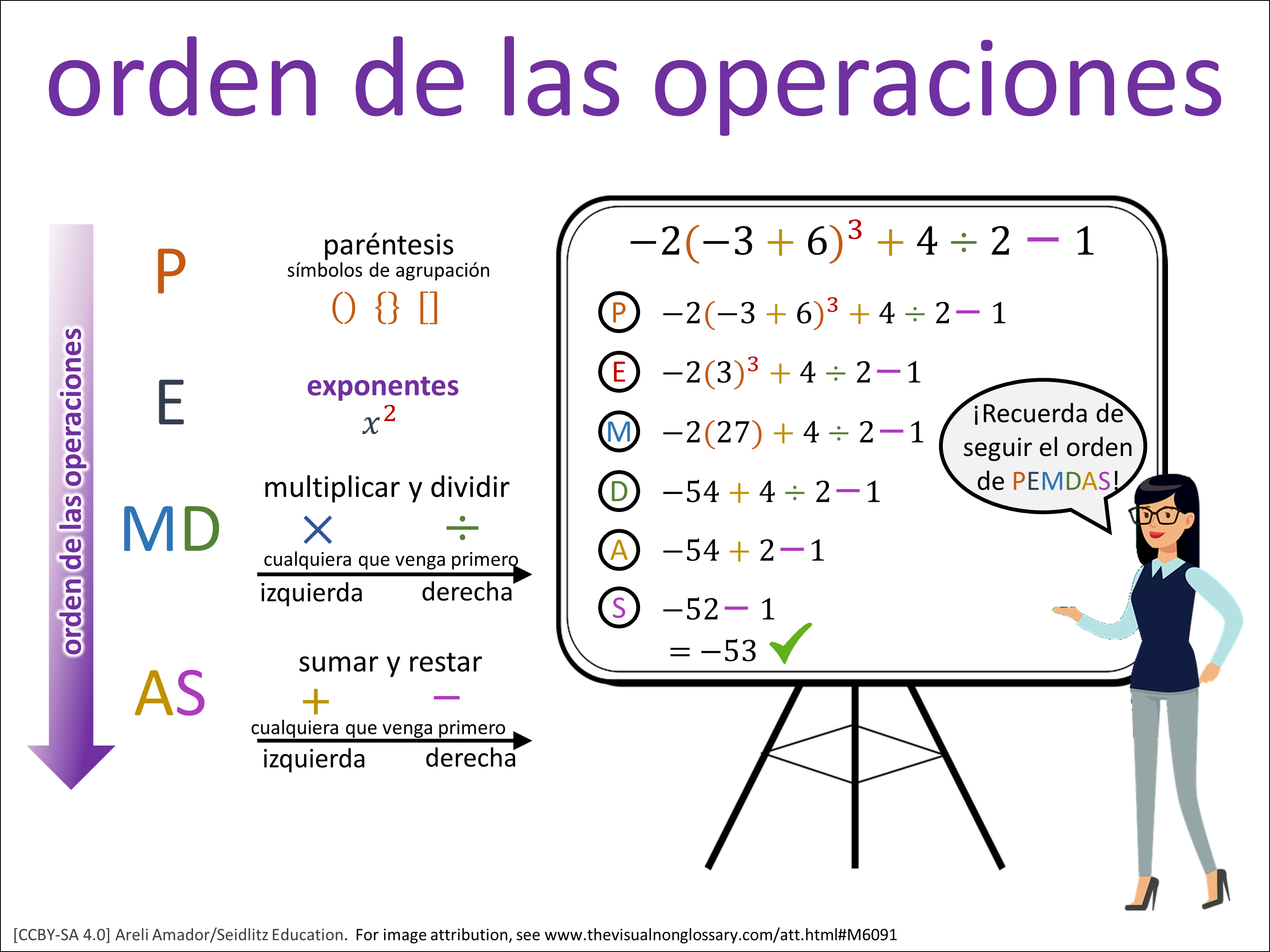
Students might notice in this visual:
- Hay un conjunto de paréntesis
- El resultado dentro del paréntesis se eleva a una potencia de 3
- Hay un número negativo multiplicando al frente: −2
- Hay múltiples operaciones: suma, división, resta
- Los pasos están marcados con P, E, M, D, A, S
EXTENDING THE DISCUSSION
After the observational question, randomly call on one or more students to share what they or their partner answered. Then ask the class, “Did anyone notice…?” using the suggestions above or anything else you’ve noticed.
Students might wonder:
- ¿Qué sucede primero: el paréntesis o el exponente?
- ¿Por qué está −2 fuera del paréntesis?
- ¿El exponente se aplica a todo o solo al número dentro del paréntesis?
- ¿Puedo hacer la suma antes que la división?
- ¿Qué significa PEMDAS?
EXTENDING THE DISCUSSION
After students have shared what they notice, ask the class, “Did anyone wonder…?” using the suggestions above or anything else you might think is interesting or relevant to the lesson.
Example student responses
To the observational question, ¿Qué es el orden de las operaciones?
LOW-LEVEL
El orden de las operaciones es la manera de resolver problemas matemáticos paso a paso para obtener la respuesta correcta.
HIGH-LEVEL
El orden de las operaciones es el conjunto de reglas que indica qué operaciones matemáticas hacer primero al resolver un problema con paréntesis, exponentes, multiplicación, división, suma y resta.
RESPONDING TO RESPONSES
Emphasize and celebrate each student’s use of the key vocabulary to support a culture of “no wrong answers.”