
Dual-Language Teachers: Have You Done Contrastive Analysis with the VNG?
In dual-language Spanish/English classrooms, contrastive analysis is a strategy that helps bridge academic vocabulary and build metalinguistic awareness. A single contrastive analysis exercise can explore cognates, suffix and prefix patterns, grammar, and writing conventions, and can produce a lot of bang for the buck. And VNG visuals can make contrastive analysis even more powerful!
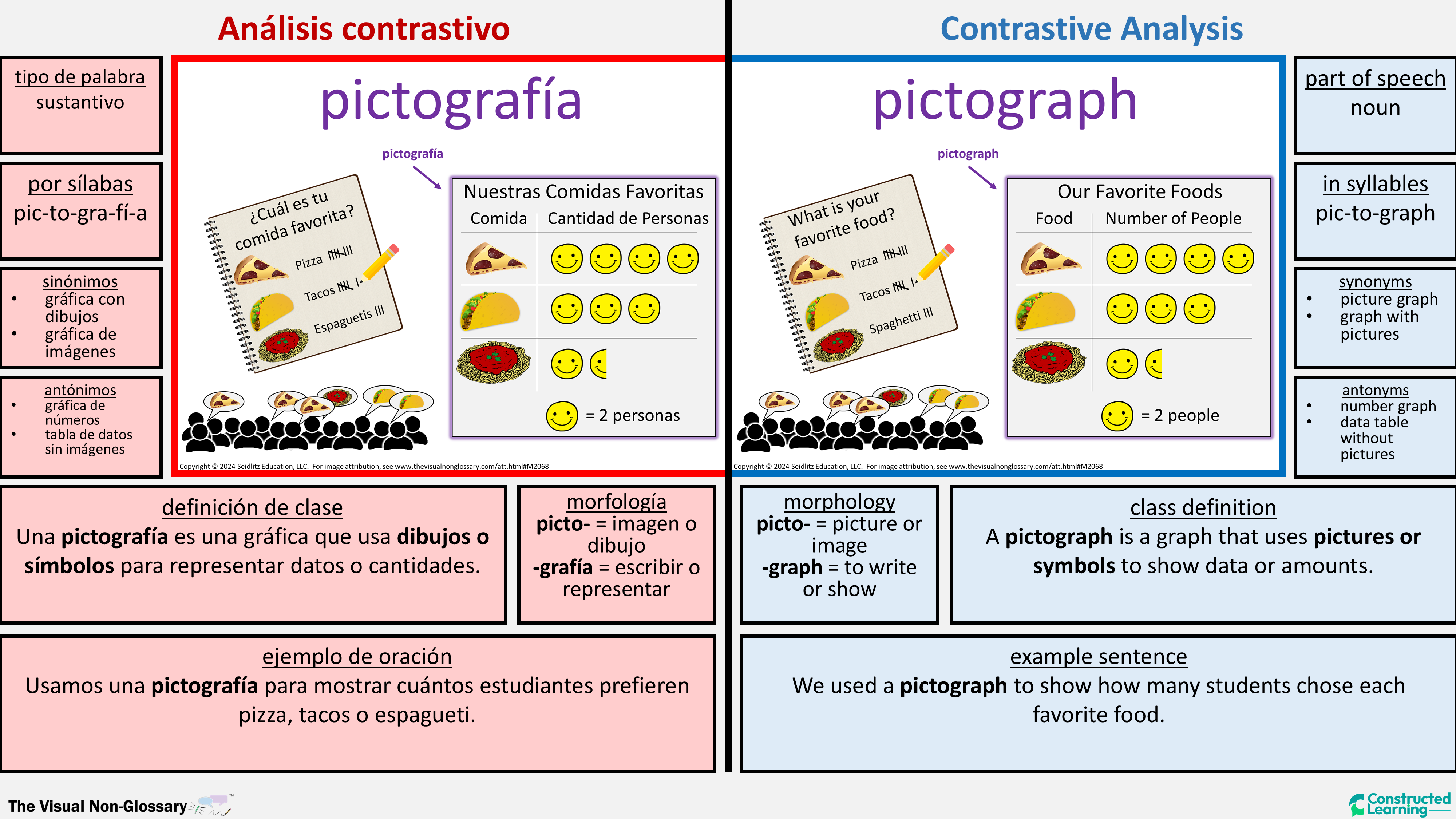
We've created a template on the Resources page to do contrastive analysis with the VNG. Here's how it works:
- Have students participate in a structured conversation using the VNG visual at the Every Voice Method, in whichever language you typically teach this content.
- Show the class the visual on the contrastive analysis template.
- Have students guess parts of speech, syllables, and morphology, then write the correct answers on the template for all students to see and copy.
- For synonyms and antonyms, have students brainstorm with their partners or table group using the sentence stem, One _____ (synonym/antonym) is… Then, call on a few students to create a class list.
- For class definition and example sentence, have students work with their partners or table groups. Call on a few groups, then create a class-wide definition and example sentence.
- Show the visual in the second language and repeat Steps 3-5.
- Ask students to share what similarities and differences they notice between English and Spanish.