
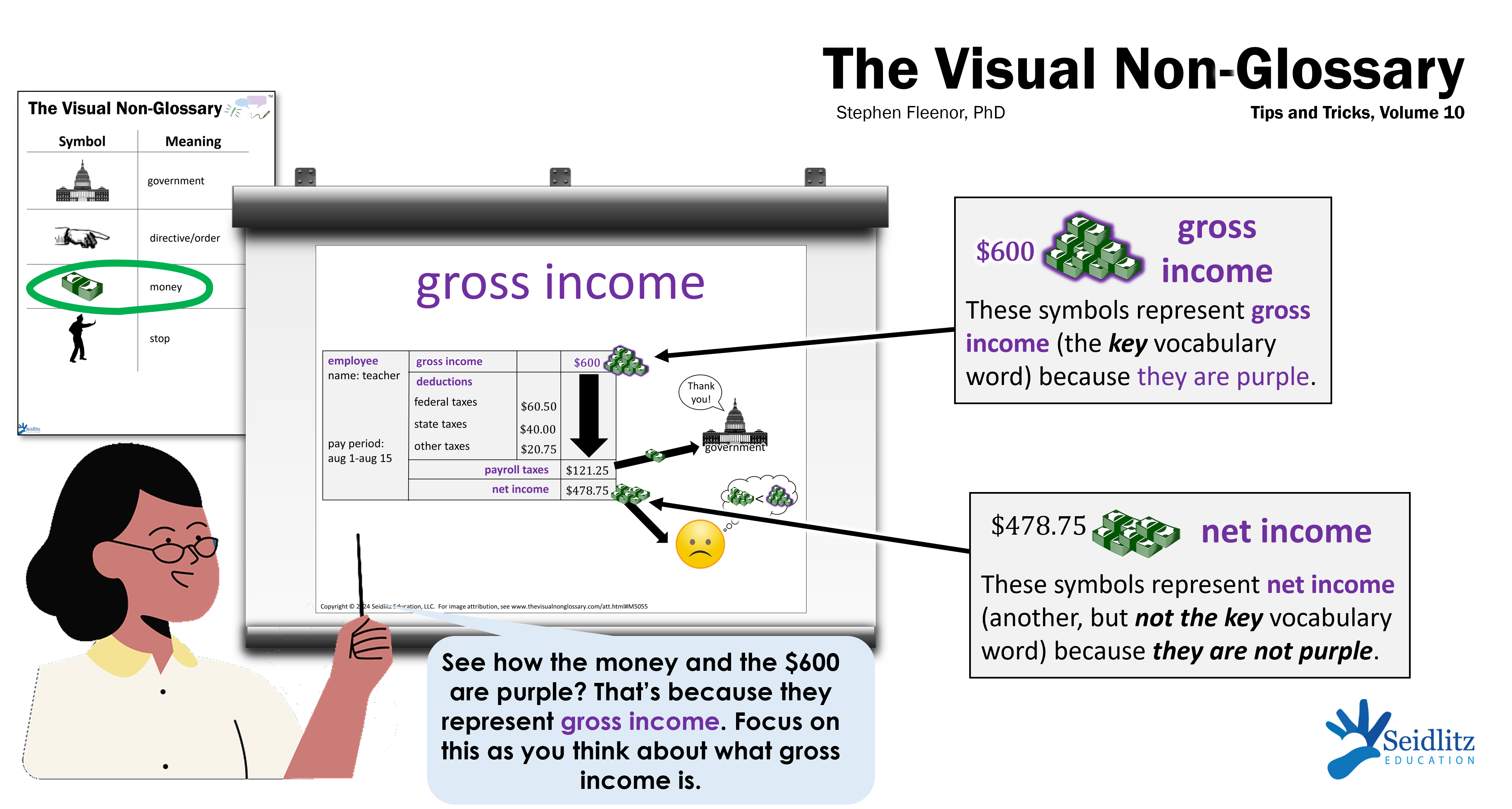
Cueing Students to the Purple
The color-coding of the Visual Non-Glossary is very intentionally designed. Sometimes specific units of study are color-coded: the Union is blue in the Civil War visuals of the US History, or x1 and y1 values in the point-slope form are yellow and green, for example. But consistently across all visuals in the VNG, the key vocabulary word of the visual is purple.
If you see a symbol with a purple glow, or a purple arrow, it means that that icon represents the vocabulary word. The secondary consumers of a food web have a purple outline in the secondary consumer visual, for example. A great way to help students navigate VNG visuals is to have them first identify the purple icon and words in the visual, and then explore the context around that icon. Here is a short video modelling how to explore the visual for the Pure Food and Drug Act.
Note: other words in the VNG visuals are also purple. These words also have visuals aligned to the same grade level.
Teaching Students the Symbols of the VNG
Some symbols are used throughout the visuals of the VNG. For example, a battery is used to represent energy, and a newspaper is used to represent a major (news-worthy) event. Especially in the beginning of the year, teaching students what certain symbols mean can help build their inferencing skills and make them less likely to feel overwhelmed when they look at a detailed visual.
To easily teach students symbols, you can print off this anchor chart and point to the common symbols on the anchor chart every time each one appears in the visual. After a few days or weeks, students will learn to look at the anchor chart, or simply learn the symbols. And as a class, you can be on the lookout for other common symbols, and add them to the anchor chart as you encounter them.